
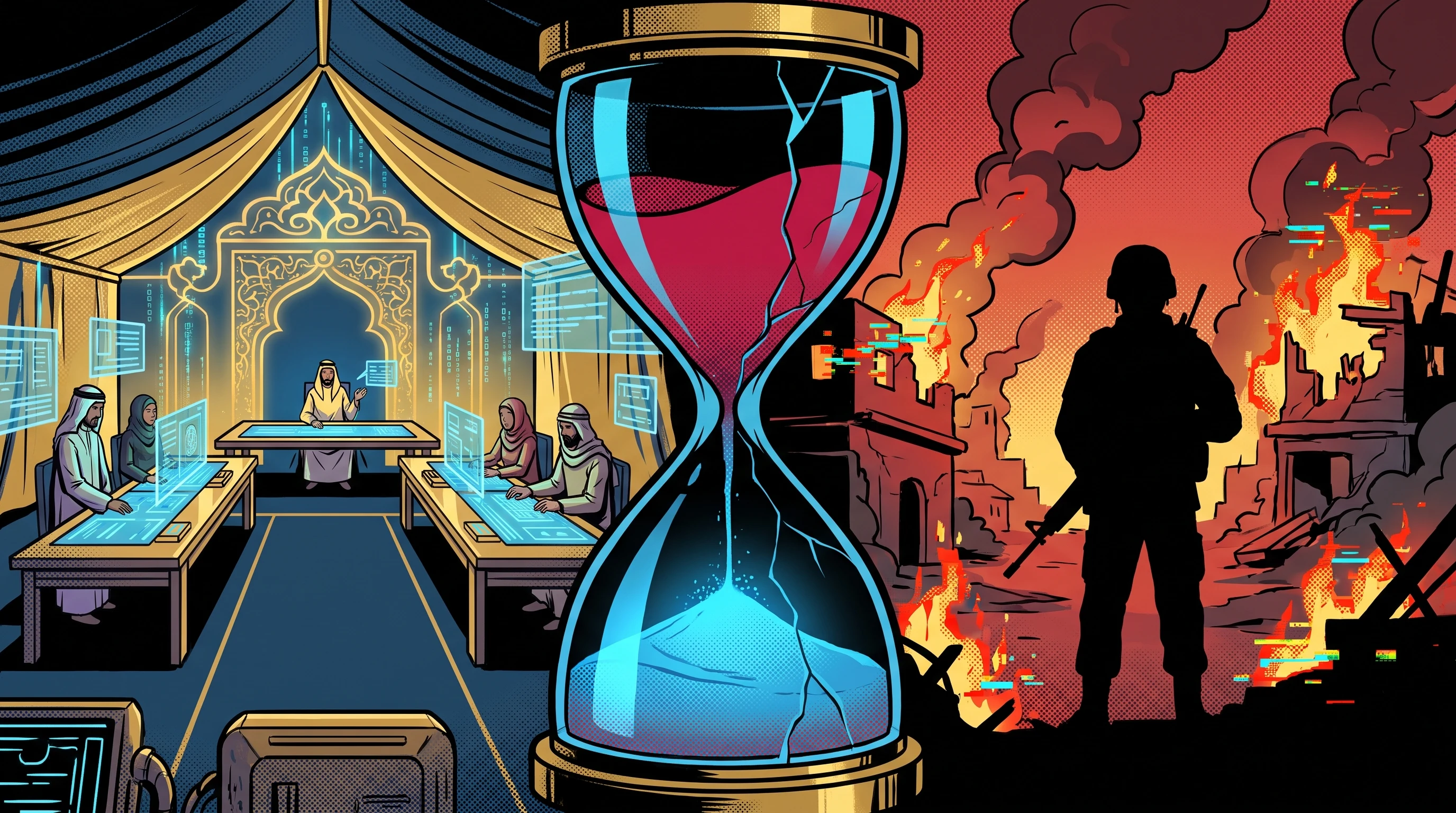
The Bridges and the Power Plants
On Tuesday, the US Naval blockade of Iran began at 20:00 GMT. Within 12 hours, the IRGC fired on two UAE-flagged oil tankers in Hormuz, killing 1 sailor and wounding 8. Within 16 hours, the IRGC launched Operation 'Nasr 2' — a ballistic-missile strike on a US air base in Jordan. Trump told Fox News: 'Next week's targets will be bridges and power plants. Unless they sit down and negotiate, we will destroy all their bridges and power plants.' He did not rule out ground troops. The day's most under-reported fact: the US has burned through ~50% of THAAD interceptors, ~50% of Patriot interceptors, and ~30% of Tomahawk missiles in 9 days. Pentagon is producing 15 Tomahawks + 20 Patriots per month, with zero new THAAD deliveries in 2026. Rebuilding the stockpile would take 3 years. The US has paused a $14B Taiwan arms sale and withdrawn THAAD from South Korea. Iranian missiles are penetrating US air defenses at an 80% rate. Araghchi: 'Iran has always been, and will remain, the Guardian of the Strait of Hormuz.' Aref: 'US tearing up signed documents shows its words cannot be trusted.' The war has crossed the threshold from military targets to publicly-threatened civilian infrastructure.
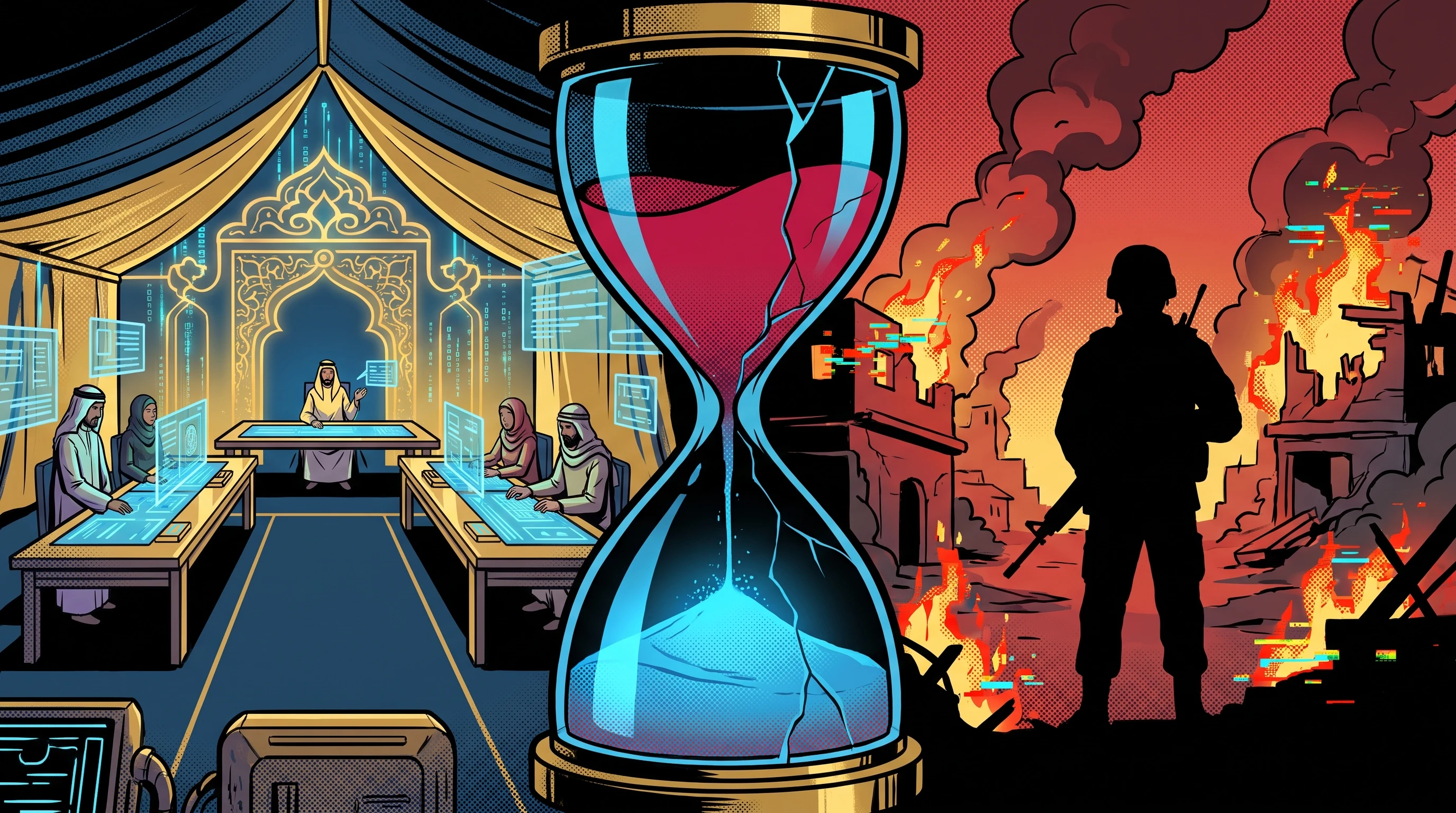
The Guardian of the Strait
On Monday, Trump declared the US the 'Guardian of the Strait of Hormuz' and announced a 20% fee on all cargo transiting the Strait plus a naval blockade of Iran starting Tuesday 16:00 ET. CENTCOM launched its third consecutive nightly strike (fourth round in a week), including the first-ever operational use of unmanned surface vessels (Corsair USV) against Iran's Bandar Abbas naval base. Iran retaliated across 4 Arab states — Kuwait (Patriot + comms + fuel + tower), Bahrain (Sheikh Isa + 5th Fleet), Jordan (second day), Oman (radar destroyed, second day) — and claimed 2 US 'Lucas' drones shot down + cruise missiles at US warships. WTI broke $75 (+5%), Brent $80, gold fell toward $4,000, markets priced in two Fed rate hikes and an ECB hike. China called for the Strait to be 'properly handled.' Trump also sent Congress the first formal War Powers notification of the new conflict on 7/10, obtained by NYT Monday. The Strait now has two announced 'guardians' and zero agreement on management.
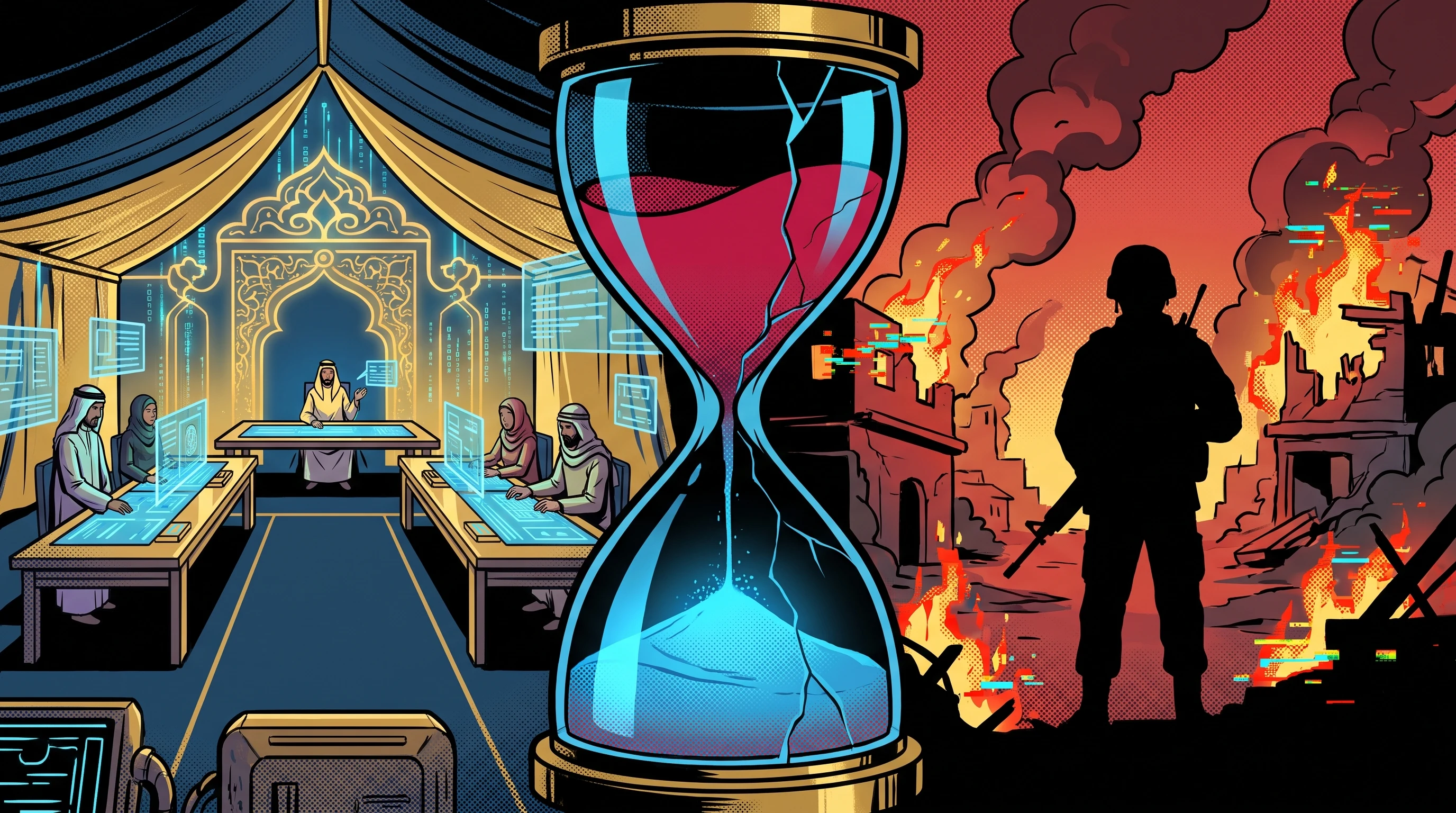
The MOU Is Scrapped
On Sunday, Trump officially scrapped the MOU. CENTCOM launched its third round of strikes on Iran in a week, hitting ~140 targets. IRGC shot the Cyprus-flagged container ship GFS Galaxy in Hormuz, and Iran then CLOSED the Strait of Hormuz INDEFINITELY 'until US stops interference.' Iran struck US bases in FOUR countries in one day: Al Udeid Air Base in Qatar, Duqm Port in Oman (first time), Kuwait Patriot air defense and radar, Bahrain comms and radar. Jordan's Azraq air base intercepted 8 Iranian missiles. Ghalibaf: 'Era of unilateral agreements is over.' Iran-Oman consultations continuing on Hormuz. The deal is, on Sunday evening, the document Trump publicly scrapped and Iran publicly scrapped by closing the Strait indefinitely.
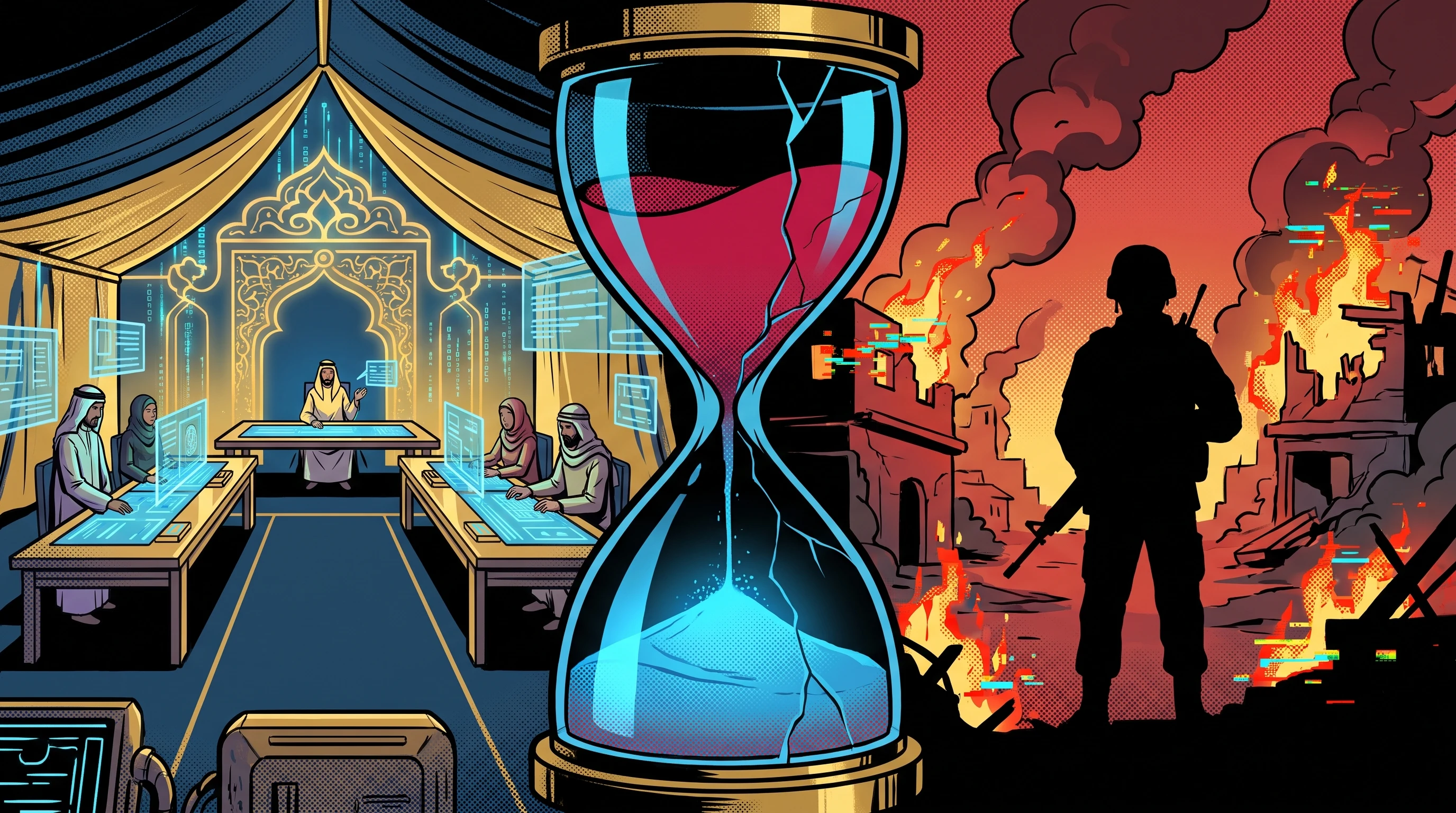
The Two Corridors
On Saturday, new Iranian Supreme Leader Mojtaba Khamenei issued his first direct public statement vowing 'revenge' for his father's death. Trump, on Truth Social Friday, said '1,000 missiles locked and loaded' aimed at Iran and 'orders have been given' to destroy Iran within a year. Yet Trump also 'agreed to Iran's proposal to continue negotiations.' Iran said it has 'rejected the US's request for negotiations.' Iran FM Araghchi visited Oman in Muscat on Saturday. Oman proposed a TWO-CORRIDOR Hormuz plan: southern lane through Omani waters = free navigation per pre-war conditions; northern lane through Iranian waters = requires prior Iran approval but no fees. Both lanes open. Qatar also involved. A 'central corridor' in international waters is also under discussion. US technical team in contact but did not send negotiators. The deal is, on Saturday evening, the document the two corridors are being publicly designed on — in the middle of a war that both sides are publicly threatening to escalate and publicly continuing to negotiate.
The Green Light
On Friday, Israeli public broadcaster reported that Israel has offered to join US strikes on Iran and is waiting for Trump's decision. Netanyahu, at an IAF pilot graduation on 7/9, said Israel killed 20 Iranian nuclear scientists and shattered Iran's ballistic missile production in the past year, and unveiled a 350B shekel ($79B) 10-year defense budget. Iran is institutionalizing calls to avenge Khamenei in weekly Friday prayers. US strikes killed 3 IRGC members in Khuzestan and 3 fishermen / injured 15 on a southern Iran fishing pier. Iran called US railway bridge strikes 'blatant war crimes.' CENTCOM says it has helped 800+ vessels transit Hormuz since May. Iran fast-tracks 11M barrels of oil as Trump threatens blockade. A Qatari official: US-Iran strikes 'put into question' key parts of the MOU. The deal is, on Friday evening, the document the green light is being publicly asked for.