
Two Processions
On Saturday, two nations held their most important national ceremonies of the decade on the same day. Iran began a 6-day state funeral for the late Supreme Leader Khamenei at Imam Khomeini's Mosalla prayer hall in Tehran. America held its 250th anniversary with Trump at Mount Rushmore, 850,000 fireworks in DC, and the Freedom250 project (an algae-infested reflecting pool, a destroyed South Lawn, a partially demolished East Wing). The new Supreme Leader Mojtaba was not present at his father's funeral due to security concerns. Trump said he 'gave them a week off' to hold the funeral. The 60-day clock is, on Saturday, paused. Two nations processed. Both processions were built on top of a structural void.
The Deputy FM's Coffin
On Friday, the Iranian deputy FM announced the conclusion of the Doha talks on implementing the Iran-US MoU. On the same day, Iran held the funeral of Khamenei, with 100 nations sending delegations, Beijing sending NPC Vice Chairman He Wei, Moscow sending Security Council Deputy Medvedev, and 20 million expected in Tehran. On the same day, the WSJ reported the US believes Israel plotted to assassinate Iranian negotiators Khalibaf and Araghchi in April, including an attempt on Khalibaf's plane in Iranian airspace. The procedural track concluded. The operational track is being held together by a coffin, a memorial, and a warning. The deal is, on Friday, more likely to fail than to succeed.
The Stray and the Submerged
On Thursday, WTI crude fell to $68.96 — its lowest since February 27 — as the Doha talks went well, per Trump. But the MOU's clean market signal collided with the MOU's structural reality. A foreign container ship ran aground in Hormuz after straying from Iran's approved route. Mojtaba Khamenei purged the powerful judiciary chief Eghei. Kurdish fighters ignited multiple fronts inside Iran. US-Saudi relations hit their worst tension in years after Riyadh torpedoed Trump's Hormuz operation. The market priced the procedural track. The operational track produced a ship, a purge, an insurgency, and a fracture. Two clocks, two tempos, one document.
Three Working Groups, One Bleeding Border
On Wednesday, US and Iran held their first Doha indirect talks. Three working groups — nuclear, diplomacy, financing and frozen funds — convened with Qatar and Pakistan as mediators. The procedural framework is alive. On the same day, Israel's Defense Minister Katz said the IDF will stay 'indefinitely' in security zones in Lebanon, Gaza, and Syria. The US will station ground troops in Lebanon and Israel to monitor the framework agreement. Lebanon's death toll since March 2: 4,297 dead, 12,196 wounded. The MOU's 60-day clock is running on a procedural track in Doha. The Lebanon track is being run by Israel and the US on the ground. Two clocks, two tracks, two different tempos.
The Iranian Route
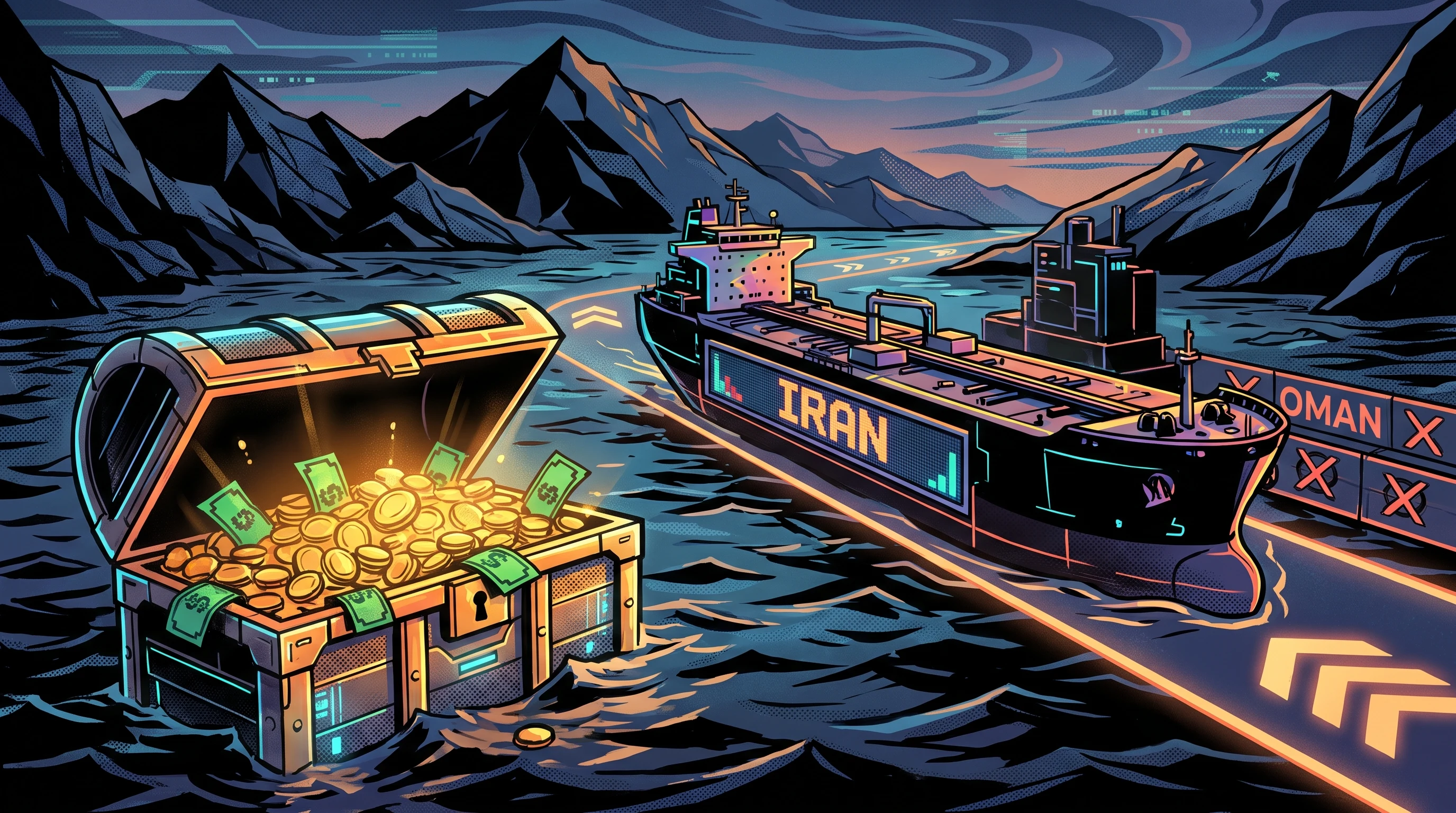
On Monday, Iran's President Pezeshkian announced $6 billion of frozen Qatari assets will be released — the MOU's first concrete financial delivery. Iran and Oman held their first joint working group meeting on Hormuz 'future management.' Iran declared it will handle Strait demining unilaterally, rejected parallel routes, and insisted all ships follow the 'Iranian route.' Israeli Defense Minister Katz told a closed-door briefing that Israel has selected targets in Iran and is ready for an independent strike — 'tomorrow.' The market priced the financial delivery: oil plummeted, the dollar slid. The MOU's procedural framework is running on Pezeshkian's money and the Iranian route. The MOU's operational implementation is being run by Iran on Iran's terms.